Product Details
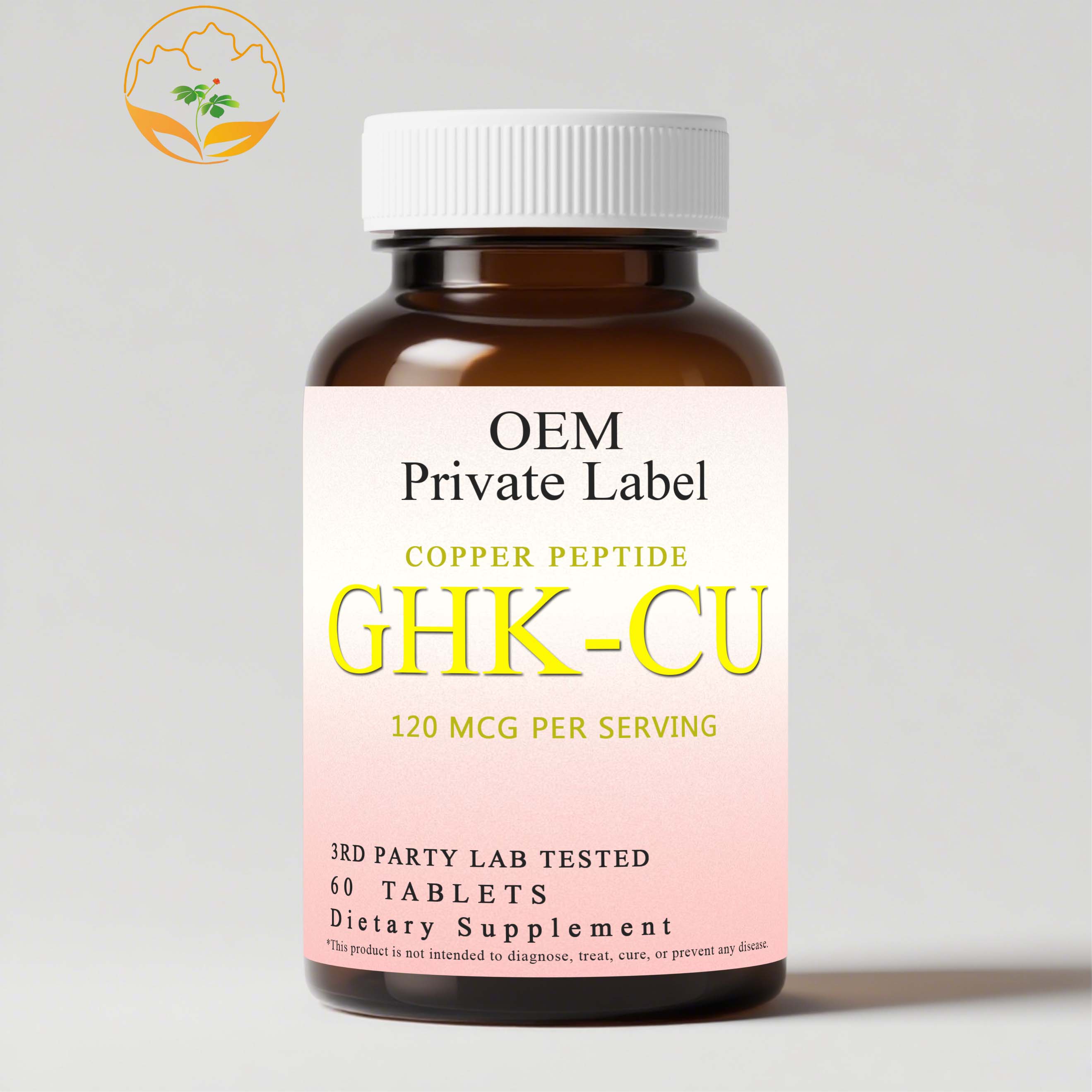


OEM GHK-CU Capsule
- All products on this website support private label customization, including custom packaging and formulations. If you need any customized products, please click the contact information on the right to inquire for a quote, or leave your contact details and we will respond to you as soon as possible.
GHK-CU (full name Chelated Copper Complex) is a copper-based compound that has garnered attention in recent years in scientific research and medical fields, particularly in studies on neurodegenerative diseases (such as Alzheimer's disease) and anti-aging. Below are its currently known or potential effects under investigation, along with relevant information:
1. Antioxidant and Anti-Aging Properties
Free Radical Scavenging: GHK-CU may utilize the redox properties of copper ions to help eliminate harmful free radicals, reducing oxidative stress-induced cellular damage.
Mitochondrial Protection: Research suggests it may improve mitochondrial function, delaying cellular aging.
2. Neuroprotective Effects
Alzheimer’s Disease (AD) Research:
Some studies indicate that GHK-CU may regulate the aggregation or clearance of β-amyloid (Aβ), thereby reducing neurotoxicity.
Copper ions participate in the regulation of various enzyme activities (e.g., superoxide dismutase, SOD) in the central nervous system, potentially influencing cognitive function.
Parkinson’s Disease (PD): Animal studies have shown some protective effects on dopaminergic neurons.
3. Anti-Inflammatory and Immunomodulatory Effects
Copper ions act as cofactors for immune-related enzymes (e.g., lysyl oxidase), and GHK-CU may modulate immune responses to alleviate chronic inflammation.
4. Cardiovascular Health
Preliminary research suggests it may protect vascular endothelial function through antioxidant mechanisms.
5. Other Potential Applications
Wound Healing: Copper ions are involved in collagen synthesis, and topical application may promote tissue repair.